
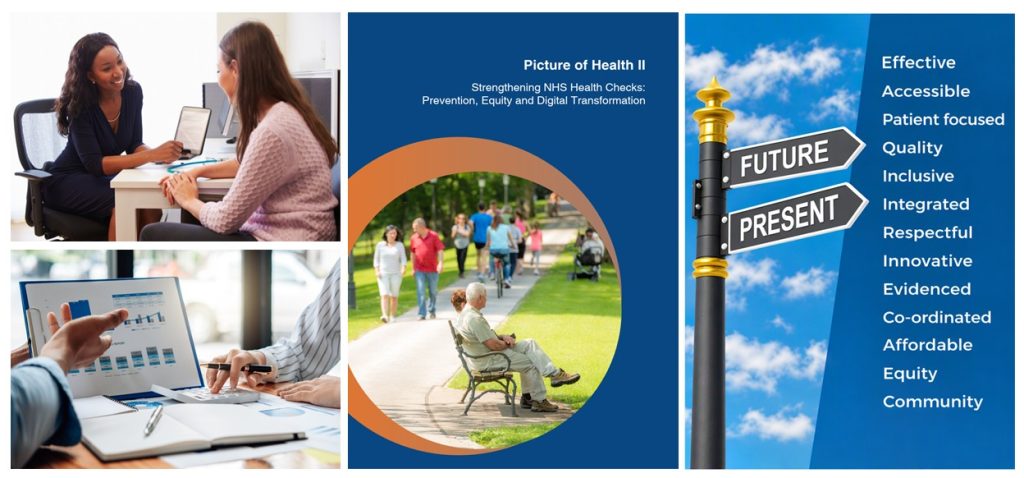
An Overview of the Picture of Health II:
New Report Highlights the Future of NHS Health Checks
and Prevention.
Picture of Health II brings together more than 15 years of experience supporting NHS Health Checks and population health programmes across England.
Health Diagnostics are excited to launch Picture of Health II, which brings together over 15 years of experience supporting NHS Health Checks and population health programmes across England. Drawing on evidence from national studies, local authority programmes, public health leaders, NHS providers and community organisations, the report makes a compelling case for placing prevention, quality and human connection at the heart of future healthcare delivery.
At a time when cardiovascular disease (CVD) remains one of the UK’s leading causes of death and growing numbers of people are living with preventable long-term conditions, the report explores how NHS Health Checks can evolve to meet modern public health challenges.
Prevention matters more than ever

The report begins by highlighting the scale of the challenge facing the NHS and wider society. Increasing levels of cardiovascular disease, obesity, diabetes and health inequalities continue to place pressure on health services, communities and the economy.
However, the report argues that there is also significant cause for optimism. Evidence increasingly demonstrates that early identification of risk, combined with effective follow-up support, can improve outcomes, reduce demand on healthcare services and help people live longer, healthier lives.
At the centre of this opportunity sits the NHS Health Check programme. As one of the world’s largest cardiovascular prevention initiatives, NHS Health Checks provide an opportunity to identify risk early and support individuals to make positive lifestyle changes before serious illness develops.
Technology alone is not the answer
A key theme throughout the report is the importance of balancing technology with human connection.
Whilst digital tools, risk algorithms, data analytics and integrated systems have transformed the way prevention programmes can be delivered, the report argues: Technology should enhance rather than replace human interaction.

Written from the perspective of psychotherapist and health researcher Dr Matthew Mellor, the foreword explores the psychological aspects of prevention and behaviour change. It highlights the importance of trust, empathy and meaningful conversations when engaging people about their health.
The report suggests that successful health improvement depends not simply on providing information, but on helping individuals understand that information, relate it to their own lives and feel supported to act upon it.
As several public health leaders featured throughout the report explain, people are often far more likely to engage when they trust the person delivering the message and feel genuinely listened to. Technology can support these interactions, but it cannot replace them.
Evidence shows NHS Health Checks work
 Improved disease detection Earlier intervention Better long-term outcomes Improved identification of cardiovascular risk, diabetes and hypertension
The report also addresses many of the debates that have surrounded NHS Health Checks since their introduction in 2009.
Drawing on a growing body of evidence, including recent long-term studies, the report highlights findings that NHS Health Checks are associated with improved disease detection, earlier intervention and better long-term outcomes.
Particular attention is given to recent research demonstrating reductions in mortality and improved identification of cardiovascular risk, diabetes, hypertension and other preventable conditions.
The report argues that whilst criticism and debate are important, discussions about the programme should be informed by the latest evidence rather than outdated assumptions. It concludes that the question is no longer whether NHS Health Checks work, but how to maximise their impact.
Not all health checks are equal
One of the strongest messages emerging from the report is that quality matters.
A recurring finding across successful programmes is that meaningful conversations, personalised risk communication and strong follow-up support are what drive change.
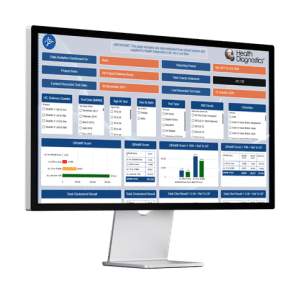 A health check should be more than a transaction or a tick-box exercise.
Health Diagnostics argues that quality consultations require practitioners to have the right information, tools and support to engage people effectively. This includes clear risk communication, behavioural change techniques, integrated referral pathways and timely access to support services.
The report highlights that when health checks are delivered well, they can act as powerful catalysts for change. When delivered poorly, their potential benefits may be significantly reduced.
Reaching communities differently
Another major theme is accessibility. The report showcases examples where innovative delivery models have helped reach people who may never have attended a traditional health check appointment.
Successful approaches include delivery through community venues, workplaces, pharmacies, mobile outreach services and voluntary sector organisations. These models have proven particularly effective for reaching underserved groups, working-age adults, ethnic minority communities and people living in areas of higher deprivation.
The report highlights projects delivered in locations such as Manchester, Durham and Merton, demonstrating how taking services directly into communities can significantly improve engagement and identify previously undetected health risks. There is also strong emphasis on the importance of cultural competence, language accessibility and community trust in reducing health inequalities.
Three ingredients of success
Based on Health Diagnostics’ experience supporting more than 70 local authorities and numerous NHS providers, the report identifies three key ingredients associated with successful prevention programmes:
Accessibility:
Making services available where people live, work and feel comfortable, whilst reducing practical, cultural and
linguistic barriers to participation.

Quality:
Providing engaging, person-centred consultations that support meaningful behaviour change and effective
onward referral to appropriate services.
Continuity:  Ensuring individuals experience a consistent journey from invitation through to intervention, follow-up and outcomes
monitoring.
The report argues that it is continuity that often determines whether a health check becomes a one-off event or the beginning of long-term health improvement.
A vision for the future
Looking ahead, the report calls for a more integrated and data-driven approach to prevention.
Key recommendations include:
- Stronger national consistency in NHS Health Check delivery.
- Improved sharing of data between providers and health systems.
- Real-time population health intelligence to support targeting and decision-making.
- Better integration between health checks, lifestyle services and community support.
- Continued investment in community-based and workplace delivery models.
- Greater emphasis on long-term outcomes rather than activity alone.
- Improved public awareness and understanding of the NHS Health Check programme.
Importantly, the report stresses that technology should continue to support prevention efforts whilst preserving the human relationships that inspire people to change.
This is our opportunity
The overarching conclusion from Picture of Health II is clear: prevention works, and NHS Health Checks remain one of the most powerful tools available to improve population health.
The challenge now is not proving their value, but ensuring they are delivered consistently, effectively and equitably across the country.
By combining high-quality digital infrastructure with trusted human interactions, the report argues that NHS Health Checks can evolve from a successful programme into a cornerstone of modern prevention policy.
As healthcare systems seek sustainable solutions to rising demand, increasing health inequalities and growing rates of preventable illness, Picture of Health II presents a powerful reminder that the future of prevention lies not in choosing between technology and people, but in bringing the best of both together.
Request a copy of the full Picture of Health II
To access the full Picture of Health Report II, complete the contact us form and state whether you would prefer a PDF or printed version. If your request is for a printed report, please provide your address.